Moving to Huntsville Alabama is a smart move for plenty of people, especially those landing a role in defense, aerospace, engineering, or federal service. The job market is strong, the cost of living can be very attractive, and a $500,000 housing budget often goes much farther here than it would in many other growing metro areas.
But we need to keep it real. Huntsville is not a giant city with endless luxury shopping, effortless public transit, and tropical weather. It is a sprawling, car-dependent city with a small-town feel, booming job growth, hot muggy summers, and infrastructure that is working hard to catch up.
Before moving to Huntsville Alabama, we need to look beyond the job offer and think through the full picture: career stability, housing, commute, schools, safety research, amenities, retirement taxes, medical care, and weather. These are the nine essentials that help us make a decision we will still feel good about years from now.
Table of Contents
- 1. Jobs and the Local Economy
- 2. Cost of Living and Housing
- 3. The Size and Feel of Huntsville
- 4. Commutes and Traffic
- 5. Schools and Education Options
- 6. Safety and Neighborhood Research
- 7. Amenities and Things to Do
- 8. Taxes, Retirement, and Health Care
- 9. Weather, Bugs, and Other Annoyances
- Where a $500,000 Budget Is Most Likely to Land
1. Jobs and the Local Economy
The first reason most people consider moving to Huntsville Alabama is simple: a job offer. Huntsville is a major hub for defense contracting, aerospace, engineering, federal agencies, and the work surrounding Redstone Arsenal. According to the Huntsville Madison Chamber of Commerce, roughly half of the area economy is supported by government spending.
That federal presence is what makes Huntsville fundamentally different from much of the rest of Alabama. The city has grown into the region's economic center, surpassing Birmingham in population, and the concentration of government and contractor work gives many professionals a level of career flexibility that can be hard to find elsewhere.
If we are in engineering, aerospace, defense contracting, or a federal-adjacent field, Huntsville can potentially be a long-term landing spot. We may be able to advance our career by moving between agencies, contractors, and related employers without having to relocate again. That matters a lot for those who are five, seven, or ten years from retirement and do not want another major move.
There is also a heavy veteran presence in the area, estimated around 10% of the population. That makes sense given the number of employers that value or give preference to veteran experience. For veterans transitioning from military service into civilian roles, moving to Huntsville Alabama can create opportunities to stay connected to the broader mission-driven work environment.
There is one major caveat. If our job is outside the defense, aerospace, engineering, or government-support ecosystem, we need to consider whether our income will keep pace with the growth it creates. Higher-paying technical jobs can put upward pressure on housing and everyday costs, even for workers who are not directly benefiting from those salary ranges.
2. Cost of Living and Housing
Cost of living is where Huntsville really shines. The overall cost of living is estimated to be about 9% lower than the national average, driven in large part by housing affordability. The median home price in Huntsville is around $325,000, and that is a number that catches the attention of people relocating from higher-cost markets.
For anyone moving to Huntsville Alabama with a housing budget around $500,000, the amount of home, land, and neighborhood options can be a pleasant surprise. This is especially true for people coming from the Washington, D.C. area, Florida, larger Texas metros, or other parts of the country where that budget may not reach nearly as far.
The real advantage is not just that homes can cost less. It is the relationship between local incomes and home prices. Huntsville has a combination that is difficult to find in similarly sized cities: strong professional salaries paired with housing that, while rising, can still feel attainable.
Of course, moving to Huntsville Alabama does not mean every neighborhood is inexpensive or that housing will remain flat forever. Growth is real, and popular areas near jobs, schools, and major conveniences carry more demand. The point is that buyers often have more flexibility here than they expect.
3. The Size and Feel of Huntsville
Huntsville is the major metropolis of North Alabama, but we need to put “major” in context. Huntsville has roughly 230,000 people, while Madison sits around 68,000, Athens around 36,000, and Decatur just under 60,000. Outside those larger communities, many nearby towns are small bedroom communities.
So, moving to Huntsville Alabama means moving to a smaller regional center, not a huge urban core. Huntsville is the big fish in this pond, but it is still a low-density, spread-out, suburban city. We are going to drive a lot.
The retail and restaurant scene is built largely for everyday life. We have the usual grocery stores, Target, Walmart, Home Depot, Lowe's, restaurants, and practical services. What we do not have is a deep bench of luxury retail or high-end dining. If Tiffany, Nordstrom, Louis Vuitton, or a major fine-dining scene are central to our lifestyle, Huntsville may feel limited.
That smaller-scale lifestyle is a positive for many households. It helps keep costs reasonable, creates a more relaxed pace, and offers a version of small-town America with better job opportunities than many smaller cities can provide.
4. Commutes and Traffic
When moving to Huntsville Alabama, commute distance should be one of the first filters we use for choosing a neighborhood. Within Huntsville proper, the average commute is around 20 minutes. Madison can also offer manageable commutes, often in the 20 to 30 minute range depending on the destination.
Once we go farther out, the numbers can change quickly. A commute from outlying areas can become 45 minutes to more than an hour during peak times, particularly for those traveling to Redstone Arsenal or major employment hubs.
Traffic is one of the biggest frustrations in the area because housing growth has spread into communities that were once farmland or lightly developed areas. New subdivisions are being built faster than some smaller municipalities can expand roads and infrastructure.
Redstone Arsenal traffic is a particular consideration. Gate closures, expanding employment, and the sheer volume of people commuting to the Arsenal can make certain routes much more difficult at rush hour. A house that looks perfect on paper can lose some appeal if the daily drive becomes exhausting.
Rather than choosing the farthest-out location just because it offers a lower price or more square footage, we need to calculate the tradeoff. A longer drive affects fuel costs, time at home, school pickups, access to amenities, and overall quality of life.
5. Schools and Education Options
Schools are a major factor for many families moving to Huntsville Alabama. Based on Alabama Department of Education scorecard data for the 2024 to 2025 period, Hartselle scored 96 out of 100 and Madison scored 95 out of 100. Madison's proximity to Huntsville makes it particularly desirable for households trying to balance school considerations with access to jobs and amenities.

Still, a school score should never be the only thing we look at. A number is one data point, not the whole story. School performance, leadership, programs, class experience, transportation, extracurricular options, and a family's own priorities all matter.
We should combine state data with third-party research, local parent groups, and direct conversations with people who have current experience in the schools. Conditions change over time, and a headline grade does not tell us everything.
For homeschool families, Alabama is generally homeschool-friendly. A cover school is required, and some options are affiliated with churches, which may or may not fit every family's preferences. There are also less restrictive cover school options available throughout the state.
6. Safety and Neighborhood Research
Safety is a sensitive subject, and it deserves more than a quick letter grade. Niche gives Huntsville a C+ crime rating based on FBI-sourced data, and several crime categories score above the national average. That is information worth taking seriously, but it should be the beginning of research, not the end.
One challenge with comparing surrounding towns is population size. Huntsville has a larger population, so its data set is more representative. Smaller communities can show dramatic crime-rate swings because a small number of incidents can heavily influence the percentages.
When moving to Huntsville Alabama, we need to decide what matters most to us at the neighborhood level. Are we looking for an HOA community with stricter property maintenance rules? Or do we prefer more freedom, knowing the condition of nearby homes may be more of a mixed bag?
The best approach is practical:
- Use multiple independent data sources instead of relying on one grade.
- Review the specific categories that matter most to our household.
- Visit neighborhoods at different times of day.
- Drive through on weekdays, weekends, mornings, afternoons, and evenings.
- Pay attention to traffic flow, upkeep, noise, lighting, and visible signs of maintenance.
A neighborhood can feel very different after dark. Small details, such as graffiti, neglected signs, or heavy traffic patterns, may be easy to miss on one daytime drive-through.
7. Amenities and Things to Do
Convenience is not spread evenly across the region. If we want easy access to grocery stores, big-box shopping, home improvement stores, restaurants, and entertainment options, the strongest choices are Huntsville, Madison, Athens, and Decatur. Hartselle has some options as well, but those four cities provide the broadest mix.
Most smaller communities function as bedroom communities. We may come home there, but we will likely drive into Huntsville or another larger city for shopping, dining, and entertainment.
Outdoor recreation is a real positive. The Huntsville area has trails, parks, and generally inexpensive access thanks to plentiful free parking. Recreation facilities are also improving. Decatur invested about $40 million in a recreation center, Athens has invested heavily in its facilities, and Huntsville continues to expand options at John Hunt Park.
Still, nightlife is limited. In many surrounding communities, things quiet down around 9 p.m. If we want a late-night city scene, a deep fine-dining lineup, or luxury experiences, we may need to travel to Nashville, Atlanta, or Birmingham.
8. Taxes, Retirement, and Health Care
For retirees, moving to Huntsville Alabama can make a lot of financial sense. Military pensions, state pension income, and Social Security income are not taxed by the state. Alabama's state income tax is around 5%, so those exemptions can help retirement dollars stretch further.
Property taxes are also notably low, among the cheapest in the country. Claiming a home as a primary residence can reduce that tax burden further, often by about half. Combined with relatively reasonable insurance costs in many areas and lower home prices, that makes the region attractive to people nearing or entering retirement.
Health care needs deserve an honest look, though. Huntsville Hospital is a large general hospital resource, but highly specialized treatment may require travel. Birmingham and Vanderbilt in Tennessee are both roughly two hours away and are common destinations for more specialized medical care.
Huntsville International Airport gives us options if air travel is necessary for care elsewhere, but it is a smaller airport. Frequent travelers should expect more connecting flights, often through Atlanta, than they might from a larger airport.
9. Weather, Bugs, and Other Annoyances
Moving to Huntsville Alabama means preparing for actual Southern weather. Huntsville is not Honolulu. Summers are hot, humid, and muggy. It can feel like 90-degree weather lasts for months, with mornings already sitting in the upper 70s or low 80s.
The area also receives substantial rain and thunderstorms, and tornadoes are a genuine consideration. Huntsville is part of a tornado-prone region. The high water table means basements are not common, so we cannot simply assume a basement will be our tornado plan. We need to think through safe-space options before buying.
Then there are the bugs. Mosquitoes are abundant. Ticks can be especially frustrating in rural, wooded, or heavily treed areas. Brown recluse spiders and black widows are also part of life here. When unpacking after moving to Huntsville Alabama, it is worth being careful with boxes that have sat in garages, storage areas, or other dark places.
There is not much snow, which is a major plus for some and a disappointment for others. The bigger issue is that the city continues to grow, and traffic remains a persistent annoyance. Infrastructure improvements are happening, but the growth pressure is obvious.
Where a $500,000 Budget Is Most Likely to Land
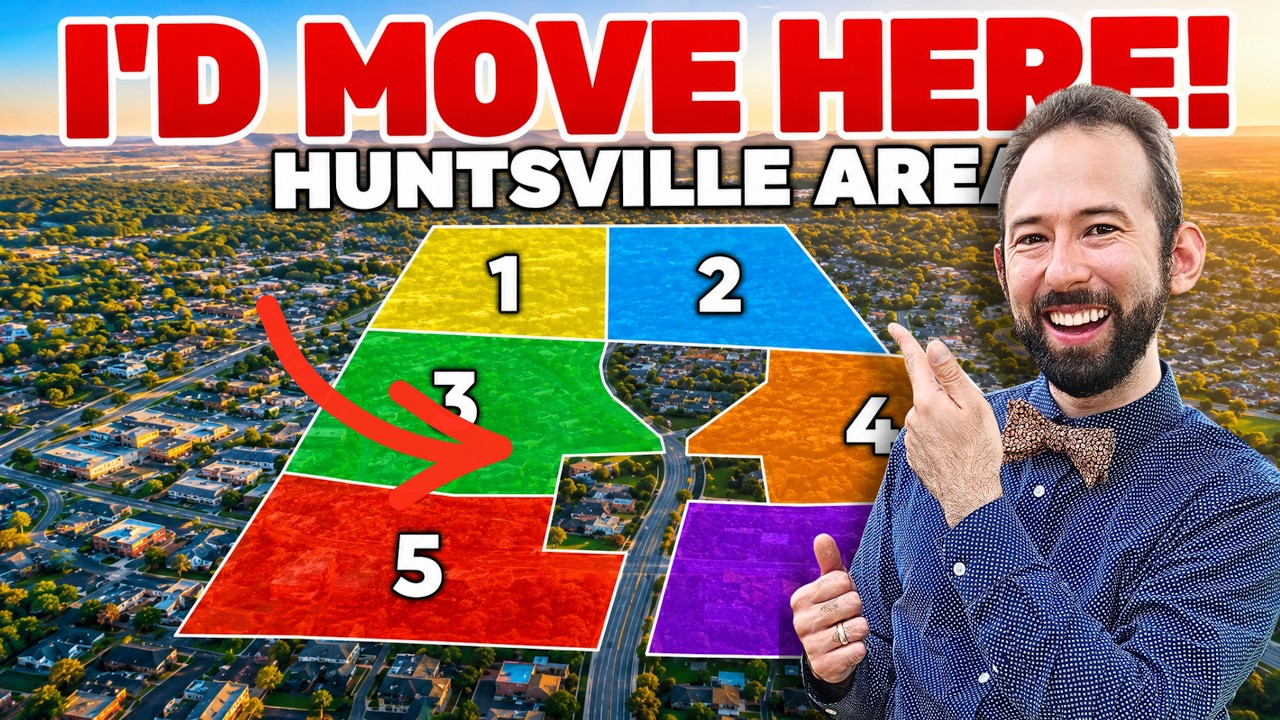
For many people moving to Huntsville Alabama with a budget around $500,000 and a job on or near Redstone Arsenal, the likely answer comes down to Huntsville or Madison. Those two cities tend to provide the combination most households are looking for: a shorter commute, stronger access to amenities, a broad housing selection, and proximity to major employers.
That does not mean Athens, Decatur, Hartselle, or smaller communities cannot be the right fit. They absolutely can, depending on our priorities. But when we weigh a $500,000 budget, access to Redstone Arsenal, commute time, schools, and daily conveniences together, Huntsville and Madison are usually where the numbers point.
The bottom line is simple: moving to Huntsville Alabama can be an outstanding decision if we value career opportunity, relative affordability, low property taxes, and a laid-back regional lifestyle. We just need to go in with clear eyes about driving, traffic, weather, limited luxury amenities, and the tradeoffs that come with rapid growth.
Frequently Asked Questions About Moving to Huntsville Alabama
Is Huntsville Alabama a good place to move for work?
It can be an excellent place to relocate for work, especially for people in defense, aerospace, engineering, federal service, and related contractor roles. Those industries are major drivers of the local economy.
Is Huntsville Alabama affordable?
Huntsville's cost of living is estimated to be about 9% below the national average, and housing remains a major advantage compared with many growing job markets. Popular neighborhoods and areas near major employment centers can still cost more.
What are the best areas for moving to Huntsville Alabama near Redstone Arsenal?
Huntsville and Madison are often the strongest choices for people working on or near Redstone Arsenal because they can offer shorter commutes, more amenities, and a broad range of housing options.
Does Huntsville have difficult weather?
Huntsville has hot, humid summers, frequent thunderstorms, significant rainfall, and tornado risk. Snow is generally limited, but severe-weather planning should be part of any home search.
Thinking about making a move to Huntsville, Alabama? Give me a call at 256-384-8486. I can help you compare communities, housing options, commute times, and the everyday tradeoffs so you can find an area that fits your lifestyle and budget.