There is plenty to like about living in Huntsville Alabama. The area has jobs, growth, relatively attainable housing, and opportunities that can genuinely change a family’s financial picture. But the brochure version leaves out some things that matter just as much once we actually call a place home.
The real question is not simply whether Huntsville is affordable or whether there are good career opportunities. It is whether the day-to-day rhythm fits our family, our commute, our expectations for community, and our tolerance for heat. Here is the honest side of living in Huntsville Alabama, including the tradeoffs we need to think through before making a move.
Key Takeaways
- Lower housing costs can create meaningful financial margin when we avoid overextending on a home.
- Commute time, road capacity, and Redstone gate access deserve as much attention as house price and square footage.
- Neighborhood design and intentional hosting play a major role in building community.
- Severe weather preparation and tolerance for hot, humid summers are essential realities of the area.
Table of Contents
- The Real Value Is Financial Margin
- Traffic Can Take Back Your Time
- Southern Culture Is Not the Stereotype
- Neighborhood Design Shapes Community
- We Have to Create Our Own Social Life
- Southern Charm Does Not Replace Boundaries
- Storms Are Part of the Reality
- The Summer Heat Is the Biggest Tradeoff
The Real Value Is Financial Margin
Housing prices are a major reason people consider living in Huntsville Alabama. A median home price around $324,000 can surprise people coming from higher-cost markets, especially when they are used to seeing much smaller homes at significantly higher prices.
But the point is not just that homes can cost less. The point is margin.
Margin means having room in the budget after the mortgage is paid. It means having the ability to save for retirement, prepare for the next house, handle surprises, take care of children, or let one spouse stay home if that is a family priority. A lower housing expense can give us choices that are much harder to find in places such as Northern Virginia, Hawaii, or other high-cost markets.
We have seen this happen firsthand. A family that spent years in a cramped two-bedroom apartment with children, pets, and another baby on the way was eventually able to buy a home for under $300,000. It was not some reckless stretch purchase either. They made compromises, bought within a reasonable housing budget, kept retirement savings in the plan, and gained a backyard where their kids could finally run around.
That is what affordability can do when we use it wisely. It is not necessarily about buying the biggest house possible. It is about avoiding a house payment that eats every bit of breathing room out of life.
For households arriving with equity from another state, or for people in higher-paying roles such as senior defense contracting, living in Huntsville Alabama can create even more flexibility. Some people sell in an expensive market and find they can put down a huge amount on a home here, sometimes reducing the need for a large mortgage altogether.
That said, affordability only works if we protect that margin in every other part of life. Which brings us to the thing that can steal it back fast.
Traffic Can Take Back Your Time
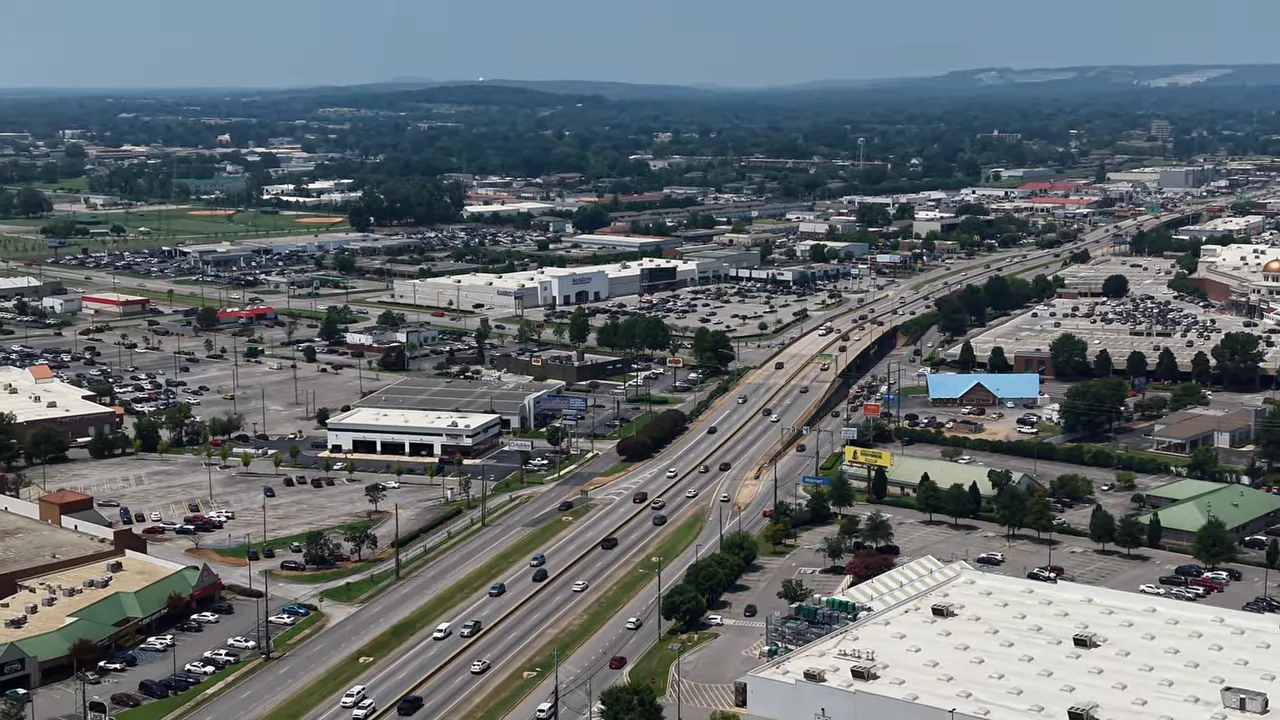
We cannot just look at a map, see a nice house, and assume the commute will be fine because the mileage looks reasonable. In Huntsville, distance and drive time are not the same thing.
A home 15 miles from work may look close enough. But depending on where it is, the time of day, road construction, office requirements, gate closures, wrecks, and development patterns, that drive can become miserable. We have seen families lose two and a half to three hours a day because everyone worked, went to school, or had activities centered in Huntsville while the home was farther out.
All the financial margin they gained through a more affordable house disappeared in time spent sitting in traffic.
The Commute Is Not Just About Mileage
A major factor is whether work-from-home plans actually stay in place. Many people bought based on telework, then later had to return to the office. That can completely change whether a location works.
Redstone Arsenal access is another important consideration. Gate closures, particularly at Gate 3, can force traffic toward other gates and add 15 to 20 minutes or more to an already busy drive. That kind of disruption compounds quickly when thousands of people are trying to reroute at the same time.
Highway 72 between Madison and Huntsville is one of those corridors where convenience and frustration live right beside each other. There is shopping, Costco, restaurants, and amenities, but traffic can be rough even around lunch, not just at five in the evening. Stop-and-go driving in summer heat is its own level of aggravation.
Going farther out can be better or worse depending on what we value. A longer drive through moving traffic can feel far more tolerable than a short distance spent inching between stoplights. Even a slow drive over the Decatur bridge can be acceptable when traffic is still rolling around 50 miles per hour. That is very different from being completely stuck.
A Simple Road Check Before Buying
Before choosing a neighborhood, look closely at the roads around it and what is being built nearby. A growing area served by only two-lane roads, with large subdivisions feeding into a few stop signs, is a warning sign. Thousands of new homes all trying to enter the same main road can create a daily bottleneck.
- Check the route during the actual hours we would drive it.
- Consider school, childcare, sports, shopping, and family activities, not just the work commute.
- Ask what happens when Redstone gates close or a wreck blocks the usual route.
- Look for road capacity and development patterns around the neighborhood.
When we are considering living in Huntsville Alabama, the right home is not only about price, square footage, or finishes. It has to give us usable time back too.
Southern Culture Is Not the Stereotype
Huntsville is more of a melting pot than many people expect because of the military, engineering, defense, and aerospace presence. Still, we are in the Bible Belt, and Southern culture is very real. It just may not look exactly like outsiders imagine.
For one thing, football is a major social language. College football can be the quickest conversation starter around here. Pick Auburn or Alabama, and suddenly we have something to discuss with people who are genuinely invested.
Accents may take a little getting used to as well, especially farther into more rural and deeply Southern areas. Certain words that sound distinct elsewhere can sound almost identical in a stronger Southern accent. We may need to ask somebody to repeat themselves once or twice, and that is okay.
Also, if somebody asks what kind of Coke we want, they may not mean only Coca-Cola. “Coke” is often used as a general term for a soft drink. Asking for Pepsi, soda, or pop can produce a moment of confusion until everybody realizes they are talking about the same category.
Manners and Etiquette Matter Here
There are a few things worth learning quickly. Funeral processions are one of them. When a police-escorted procession goes by, people stop and wait. Do not cut through it. It is a visible expression of respect, and ignoring it will not go unnoticed.
“Sir” and “ma’am” are another cultural adjustment. In some parts of the country, calling a younger woman “ma’am” can sound offensive or overly formal. Here, it is generally intended as respect. A person in their twenties may be called ma’am by someone younger, and it is not meant as a comment on age.
We should also understand that “bless your heart” is not always the compliment it appears to be. Sometimes it is sincere. Sometimes it is a very polite wrapper around “that was not very smart.” Context is everything.
And then there is the Southern goodbye. A goodbye may take several tries. We say we are leaving, somebody remembers one more story, another person walks over, and 30 minutes later we are still standing there. For social people, that can feel like home. For people who like a fast exit, it takes a little practice.
In more rural parts of the area, expect the two-finger wave from passing drivers. Waving back is simply the polite thing to do. Small gestures like that are part of the hospitality people notice when living in Huntsville Alabama and the surrounding communities.
Neighborhood Design Shapes Community
People often assume Southern neighborhoods automatically mean everyone knows everyone. That is not always the case. The type of neighborhood we choose can make a huge difference in how connected we feel.
An entry-level, working-class subdivision may have many renters, people moving in and out, long work hours, garage-forward homes, limited sidewalks, and few common amenities. There can absolutely be wonderful neighbors there, but the design does not naturally create many chances to meet.
On the other hand, higher-priced neighborhoods may have more residents who are further along in their careers, nearing retirement, or retired. They may simply have more time to walk, be outside, and interact. That does not make one neighborhood better than another. It means the lifestyle patterns can be different.
Then there are communities designed around front porches, sidewalks, parks, and shared gathering spaces. Providence is an example of a master-planned environment where the layout encourages interaction. When homes are built around porches rather than garages, people walk dogs, spend time outside, and run into each other naturally.
If connection matters to us, we should look beyond the home itself and ask:
- Are there sidewalks and places to walk?
- Does the neighborhood encourage front-porch living?
- Are there amenities that bring people together?
- Is the area quiet enough and walkable enough for casual interaction?
- Does the price point and housing style match the social rhythm we want?
Rural living has a different version of community. It can take years to get to know neighbors, but it also creates practical reasons to do so. If a neighbor’s cows get into the pasture, for example, we need to know who to call. There can be more mutual reliance, even if there are fewer spontaneous walks and sidewalk conversations.
We Have to Create Our Own Social Life
Huntsville and its surrounding towns can feel like places where everybody has known everybody for generations. Sometimes families do go way back. But that does not necessarily mean those relationships are as deep or active as they appear from the outside.
People may share old memories, attend the same church, or have gone to school together, yet not regularly visit each other’s homes. That is good news for newcomers. We do not have to be intimidated by the fact that other people have history.
If we want real connection, we need to make the effort. Host a barbecue. Invite people for a game night. Start a Bible study. Use the dining room. Find a house with a pool or a game space if entertaining is important to us. The people who open their homes and create opportunities for one-on-one connection can build community quickly.
Living in Huntsville Alabama does not mean community automatically appears at the front door. It means there is a real opportunity to create it if we are willing to be intentional.
Southern Charm Does Not Replace Boundaries
Southern politeness is often warm, generous, and genuinely respectful. But we should not confuse charm with a free pass around personal boundaries.
This matters especially for parents. Some people can be very forward around babies and young children. A stranger may ask to hold a child, push the issue, or make a parent feel rude for saying no. We do not owe anybody access to our kids just because they are being sweet or acting offended.
Kindness is good. Hospitality is good. But clear boundaries are good too. We can say no, be direct, and protect our family without apologizing for it. Bringing a little of that East Coast bluntness when needed is not a bad thing.
Storms Are Part of the Reality
Tornadoes get the headlines, but severe weather in this area is bigger than tornadoes alone. Thunderstorms, lightning, straight-line winds, flash flooding, and power flickers are part of the reality of living in Huntsville Alabama.
A pop-up storm can turn serious quickly. High winds can damage outdoor structures, force open poorly secured doors, knock down trees, and wash out roads. Flash flooding can also affect travel, which matters if our storm plan depends on driving to a nearby shelter.
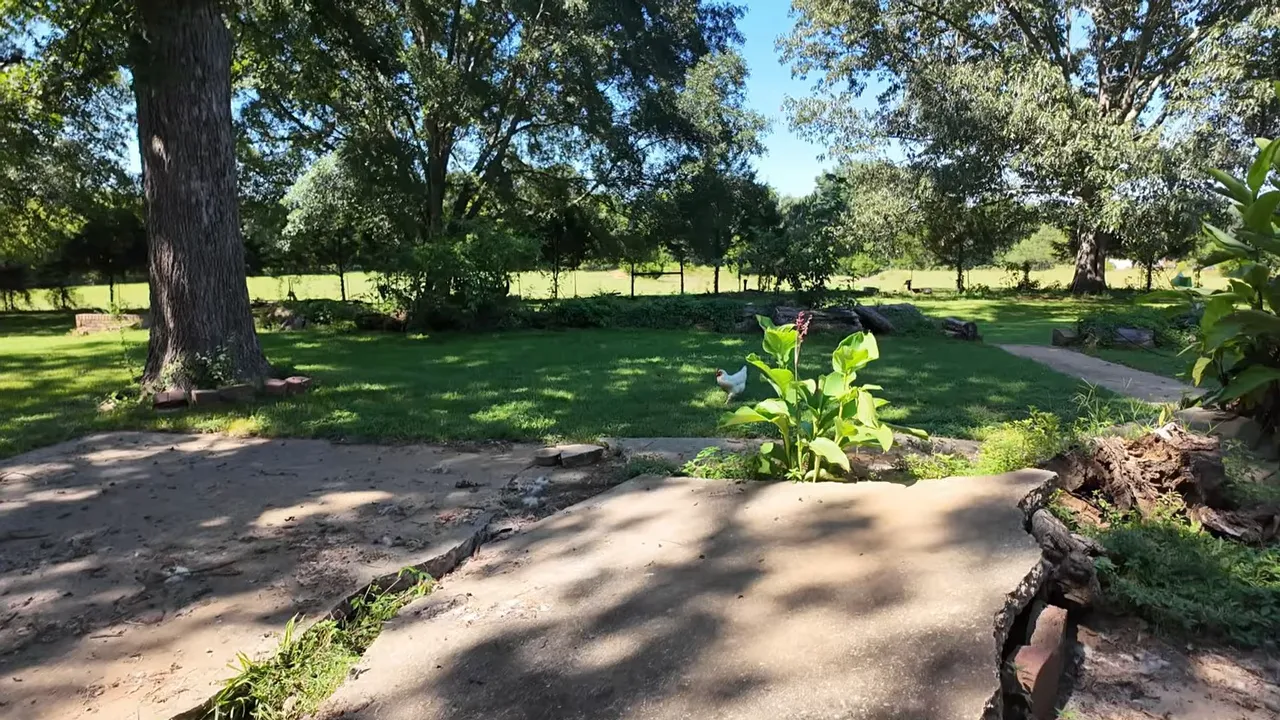
One of the most important lessons is that it does not take a tornado to cause major damage. Straight-line winds brought down an 80- to 90-year-old pecan tree near a family home. The tree fell away from the house, thankfully, but the outcome could have been far worse if it had fallen in the other direction.
Large trees are beautiful, but we should think carefully about how close they are to the house. We should also not assume that a designated tornado shelter is automatically accessible during every storm event. Flooded roads and darkness can complicate even a good plan.
A Practical Weather Preparedness Plan
- Keep a weather radio and do not rely only on noticing the storm outside.
- Know the safest place in the home and consider a safe room when possible.
- Understand nearby shelter options, along with routes that could flood.
- Maintain appropriate home insurance.
- Pay attention to trees, drainage, and potential wind hazards around the property.
Every region has weather risks. The West Coast has wildfires. Hawaii has hurricanes. North Alabama has severe storms. These are manageable risks when we have a real plan instead of assuming it will never happen to us.
The Summer Heat Is the Biggest Tradeoff
If there is one thing that could make us consider leaving, it is not tornadoes. It is the brutal stretch of summer heat and humidity.
For roughly four to six weeks, and sometimes more like six to eight depending on the year, the heat can make outdoor life feel like work. Real-feel temperatures around 110 to 115 degrees, combined with humidity, can make us question every plan that involves leaving air conditioning. When it is already 80 degrees at eight in the morning, it does not take long to lose motivation.
Evening walks with a stroller can disappear. Botanical garden memberships can go unused. Trails may be beautiful, but hiking is much less appealing in the thick summer heat. Water activities become the obvious alternative, except afternoon thunderstorms can shut those down too.
Then there are the bugs: mosquitoes, gnats, ticks, fleas, fire ants, and sweat bees. Summer is not just hot. It can be buggy enough to make basic outdoor chores irritating.
Winters are generally milder, though there may be a few hard-freeze days when pipes burst, roads turn icy, schools close, and everyone scrambles for plumbing supplies. The upside is that spring arrives earlier and fall lasts longer. Those seasons are a major part of why people enjoy the area.
The honest tradeoff of living in Huntsville Alabama is that we may lose some of peak summer to the heat, but gain financial room and more manageable weather through much of the rest of the year. If this place had perfect California weather year-round, it probably would not be priced the way it is.
That is the reality: Huntsville can offer a lot, but it works best when we go in with our eyes open. Find a home that protects both the budget and the calendar. Choose a commute we can live with. Learn the culture without losing our boundaries. Prepare for storms. And be honest about whether the summer heat is a dealbreaker for our household.
Frequently Asked Questions About Living in Huntsville Alabama
Is living in Huntsville Alabama affordable?
It can be, particularly compared with many larger and higher-cost markets. The biggest advantage is often the financial margin created by a more manageable housing payment, which can leave room for savings, retirement, family priorities, and future goals.
Is traffic bad in Huntsville?
Traffic can be a serious issue in certain corridors and during peak times. Highway 72 between Madison and Huntsville, Redstone Arsenal gate changes, new development on two-lane roads, wrecks, and return-to-office requirements can all make a seemingly reasonable commute much longer.
What should we know about Huntsville culture?
Expect a blend of transplants and Southern traditions. College football is a major social topic, “sir” and “ma’am” are signs of respect, funeral processions are treated seriously, and more rural communities may include friendly waves from passing drivers.
How severe is the weather in Huntsville?
Severe weather can include tornadoes, thunderstorms, lightning, straight-line winds, flash flooding, and power flickers. A weather radio, a safe-place plan, good insurance, and awareness of trees and drainage around a home are practical precautions.
What is summer like in Huntsville?
Summer can be intensely hot and humid, with a four- to six-week stretch that limits outdoor activities for many families. Afternoon thunderstorms, mosquitoes, ticks, fire ants, gnats, and other insects add to the challenge, while spring and fall tend to be more comfortable.
If you’re thinking about moving to Huntsville, Alabama, and want an honest look at what life here is really like, give me a call at 256-384-8486. I can help you compare communities, home prices, commutes, and the day-to-day lifestyle so you can decide if Huntsville is the right fit for you.